Come to Portovenere for the views, stay for the food.
This small Ligurian village sits between the sea and steep Mediterranean hills, and its cuisine reflects both. Local menus are shaped by fresh seafood from the Gulf of Poets, basil and aromatic herbs, extra virgin olive oil, focaccia and local wines.
So, what should you eat in Portovenere? From mussels and oysters to pesto and focaccia, here are the flavours and dishes worth looking out for during your stay.
What food is Portovenere known for?
Portovenere shares many of the flavours found across Liguria and the nearby Cinque Terre, but its position on the Gulf of La Spezia gives seafood an especially important role.
The essentials to look for are:
- Pesto Genovese
- Muscoli, the local name for mussels
- Oysters from the Gulf of La Spezia
- Anchovies
- Focaccia
- Farinata
- Mesciua
- Extra virgin olive oil
- Vermentino and other local wines
- Sciacchetrà from the Cinque Terre
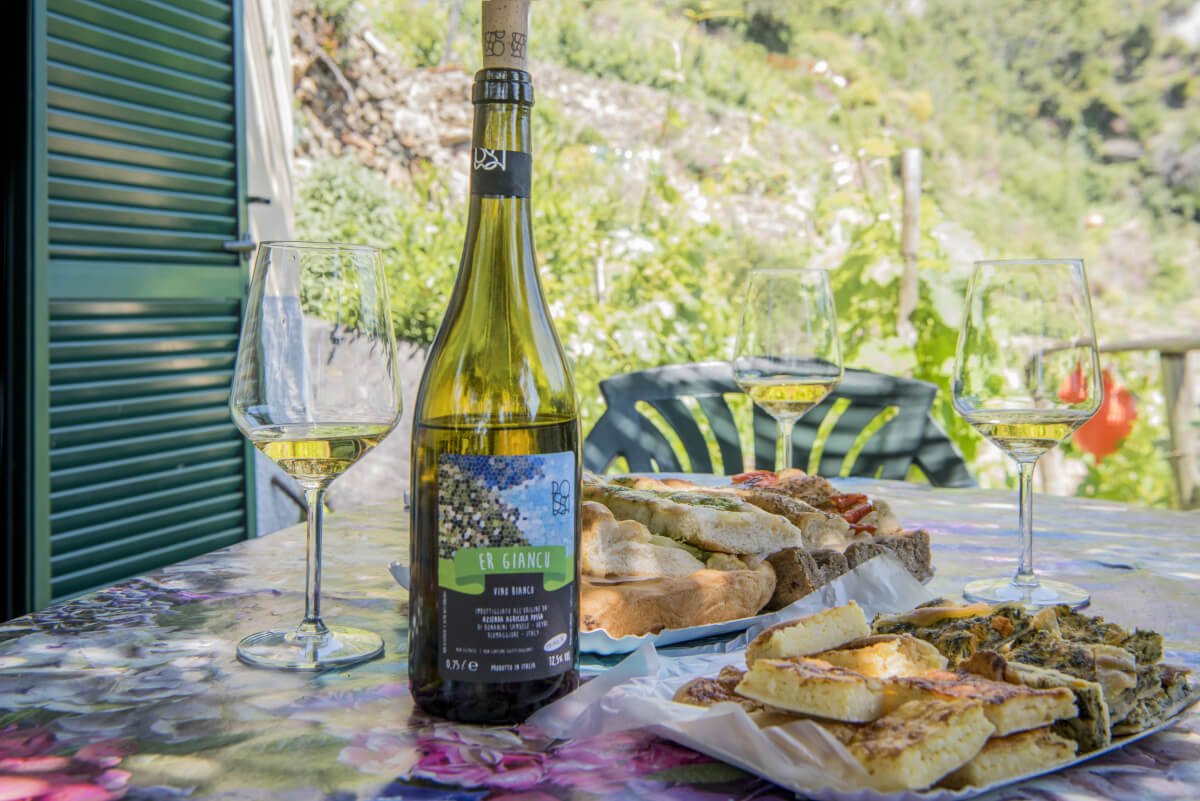
Liguria’s official tourism portal counts fresh basil, extra virgin olive oil, mussels from the Gulf of La Spezia and the wines of the Cinque Terre among the products that define the region’s food culture.
Here are a few to put at the top of your list.
Pesto: Liguria on a plate
You will find pesto throughout Liguria, but eating it here somehow makes more sense. Basil thrives in the mild coastal climate and has become one of the ingredients most closely associated with Ligurian cooking.
Traditional pesto combines basil, pine nuts, garlic, Parmigiano Reggiano, Pecorino, extra virgin olive oil and salt. Traditionally, the ingredients are worked together in a mortar rather than blended into a completely smooth sauce.
And the pasta matters too. Look out for pesto served with trofie or trenette, sometimes accompanied by potatoes and green beans.
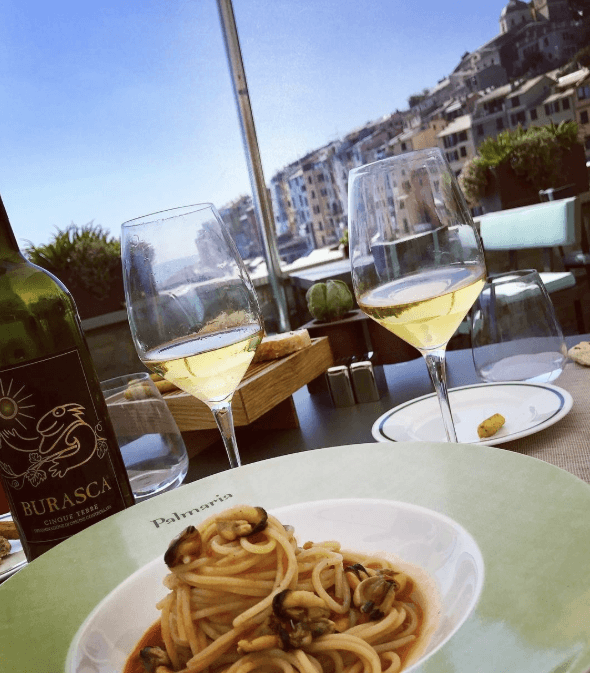
If simply eating pesto isn’t enough, you can learn how to make it yourself. Grand Hotel Portovenere offers a cooking lesson with its Chef, during which guests prepare potato gnocchi, Ligurian pesto and dessert before sitting down to enjoy what they have made at Palmaria Restaurant.
It is a good souvenir to take home — no extra space in your suitcase required.
Muscoli: don’t call them cozze
Ask a local about cozze and you may quickly learn a new word: muscoli.
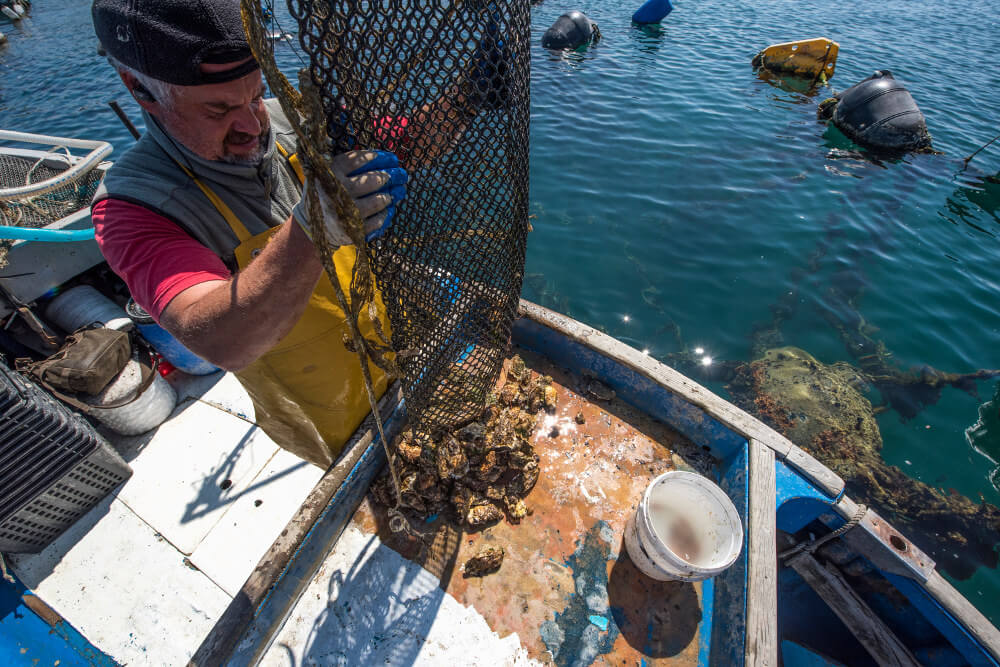
This is what mussels are traditionally called around La Spezia. Mussel farming in the gulf dates back to around 1887, and the mussels are still cultivated in local waters, including around Portovenere and Palmaria Island.
You will notice the farms from the water: rows of poles, ropes and floats form geometric patterns across parts of the gulf.
Muscoli appear on menus in many forms. They can be served simply, cooked in their own juices with herbs and perhaps a little white wine, tossed through pasta or used in seafood risotto.
Muscoli ripieni alla Spezzina
Muscoli ripieni are one of the signature dishes of La Spezia and the Gulf of Poets.
Traditionally, the mussels are stuffed with a mixture that can include breadcrumbs soaked in milk, garlic, herbs, Parmesan, egg and mortadella.
It is exactly the kind of recipe that tells you something about local cooking: seafood, humble ingredients and plenty of flavour, all brought together in a dish made to be shared.
Oysters: another taste of the Gulf of Poets
Mussels are not the only shellfish being cultivated here.
The Gulf of La Spezia also produces oysters, nourished by local phytoplankton, which contributes to their distinctive salinity and aromatic character.
You can taste them in Portovenere, but you can also go and see where they come from.
The Oyster Tour departing from Portovenere takes you by boat around Palmaria, Tino and Tinetto before visiting the oyster farms of La Spezia. An expert explains how oysters are cultivated at sea, followed by an onboard aperitif with oysters, local focaccia and white wine from the Cinque Terre. The experience lasts around four hours.
For food lovers, it is one of those rare opportunities to connect what is on the plate with the landscape — or, in this case, the seascape — that produced it.
Anchovies: small fish, big Ligurian tradition
Anchovies are another staple of the eastern Ligurian coast, particularly around the Cinque Terre.
They may arrive marinated with olive oil and lemon, seasoned with garlic and parsley, fried until crisp, stuffed, or combined with potatoes and other simple ingredients.
They are particularly associated with Monterosso, where anchovies have long been part of the local fishing tradition.
Pair them with a chilled local white wine and you have one of the simplest — and most satisfying — tastes of the Ligurian coast.
Focaccia and farinata: keep lunch simple
Not every memorable meal needs several courses. Walk into a bakery around Liguria and two things are difficult to resist: focaccia and farinata.
Ligurian focaccia is wonderfully simple: soft inside, lightly crisp on the surface and generously seasoned with olive oil and salt. Eat it as a snack, for a quick lunch or, as many Ligurians do, whenever you happen to pass a bakery and smell a fresh batch.
Farinata is very different. Made from chickpea flour, water, extra virgin olive oil and salt, it is baked until the surface is golden while the inside remains soft. The best advice? Eat it hot.
Mesciua: the dish many visitors don’t know
Pesto may be internationally famous, but mesciua takes you much closer to La Spezia.
This traditional soup is made with legumes and cereals, typically including chickpeas, cannellini beans and spelt (or other grains like barley). Its roots are connected to the city’s port: according to local tradition, the wives of dock workers collected grains and legumes that had fallen from sacks during unloading, then mixed — mescià in the local dialect — whatever was available.
The result is simple, filling and closely tied to the history of La Spezia. If you visit during the cooler months, it is one of the local dishes worth looking for.
Extra virgin olive oil: the ingredient behind almost everything
Olive oil is so fundamental to Ligurian cooking that it is easy to overlook it. Don’t.
Olive trees grow on the hills and terraces above the coast, and extra virgin olive oil finds its way into pesto, focaccia, farinata, fish dishes, vegetables and countless other recipes.
One way to appreciate it properly is through an olive oil tasting, where the oil becomes the focus rather than simply an ingredient. Tasting it on its own reveals aromas, bitterness, fruitiness and peppery notes that can easily disappear once it becomes part of a dish.
It also changes the way you taste Ligurian food afterwards: suddenly that drizzle over a piece of focaccia doesn’t seem quite so incidental.
What to drink in Portovenere
Seafood may dominate the table in Portovenere, but the wines are just as closely connected to the surrounding landscape. Two areas in particular are worth discovering: the Colli di Luni, between Liguria and Tuscany, and the steep vineyards of the Cinque Terre.
Vermentino from between Liguria and Tuscany
If there is one wine to remember while visiting Portovenere, make it Vermentino.
Fresh, aromatic and naturally at home beside seafood, Vermentino is widely produced in this corner of Liguria and just across the regional border in northern Tuscany.
One of the areas particularly associated with the grape is Colli di Luni, a wine-growing territory stretching across the border between Liguria and Tuscany, from the province of La Spezia towards the hills around Massa-Carrara. Here, Vermentino is the leading white grape and the basis of Colli di Luni Vermentino DOC.
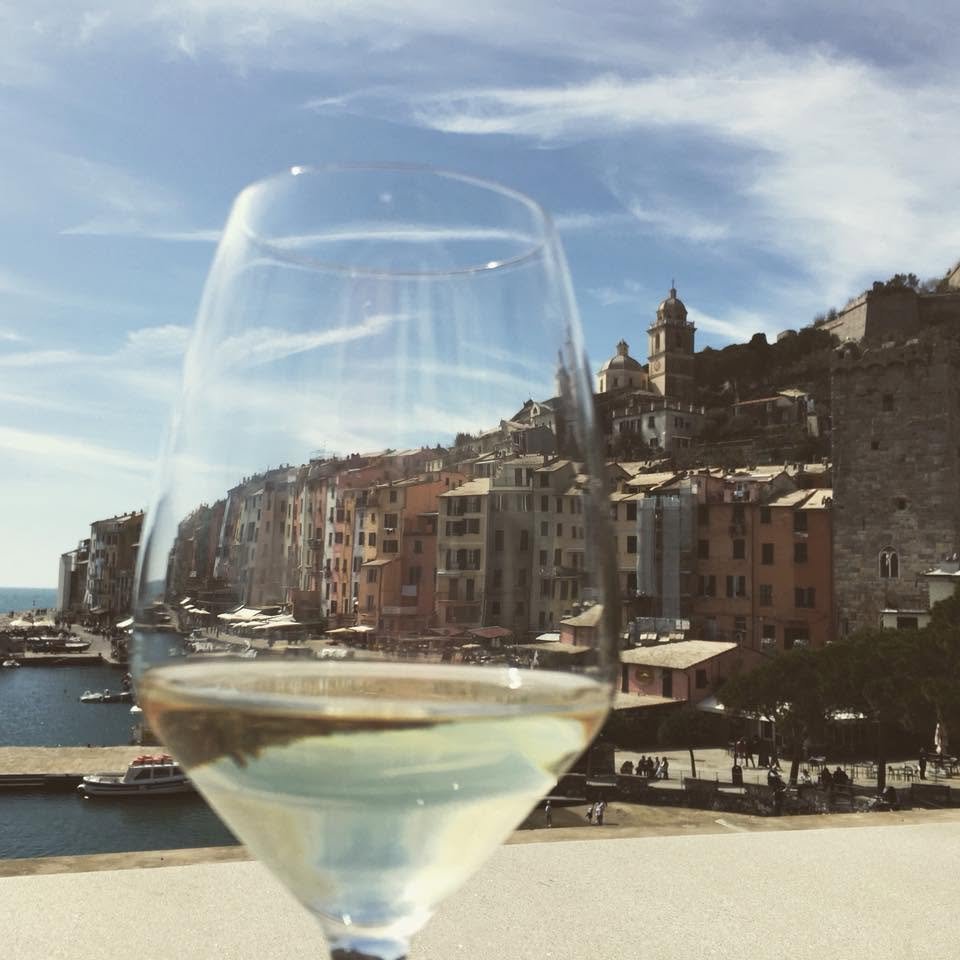
It is an easy companion for many of the foods you are likely to encounter around Portovenere: mussels, oysters, anchovies, seafood pasta and simply prepared fish.
Wine lovers can explore the area through visits to family-run wineries in the Colli di Luni, including producers such as La Pietra del Focolare, Arrigoni, Ca’ Lvnae and Cantine Federici.
Back in Portovenere, Grand Hotel Portovenere offers Mister Vermentino: White Wine between Liguria and Tuscany, a guided tasting with the sommelier dedicated to this grape. It is one of three private wine-tasting itineraries available at the hotel, each featuring three wines accompanied by appetizers.
Or simply order a glass of Vermentino at Venus Bar, overlooking the harbour and Palmaria Island, and enjoy it at your own pace.
Cinque Terre wines and Sciacchetrà
In the other direction, Portovenere is an excellent base for discovering the remarkable vineyards of the Cinque Terre.
Here vines grow on steep terraces overlooking the Mediterranean, in landscapes where mechanisation is difficult and much of the work must still be carried out by hand. This challenging relationship between people and landscape has given rise to what is often described as heroic viticulture.
Among the area’s most distinctive wines is Sciacchetrà, a sweet wine made from dried grapes and traditionally served with desserts or cheese.
For a closer look, vineyard visits can be arranged from Portovenere. One experience takes you to Azienda Agricola Possa in Riomaggiore, where artisan winemaker Samuele Heydi Bonanini works the steep, sea-facing vineyards of the Cinque Terre. The visit includes a walk through the vineyard followed by tastings of Sciacchetrà, classic Cinque Terre whites and other wines.
Where to eat in Portovenere
So, what is the best restaurant in Portovenere? Rather than searching for one universal answer, think about what you want from the meal. Portovenere is at its best when the food connects you with the gulf: local seafood, seasonal ingredients, Ligurian recipes and wines produced within a relatively short distance.
For a more refined interpretation of the territory, Palmaria Restaurant at Grand Hotel Portovenere combines Ligurian ingredients and traditions with contemporary cooking, overlooking the harbour and Palmaria Island. The restaurant has also been included in the Italian Celiac Association’s 2026 Alimentazione Fuori Casa programme for gluten-free dining.
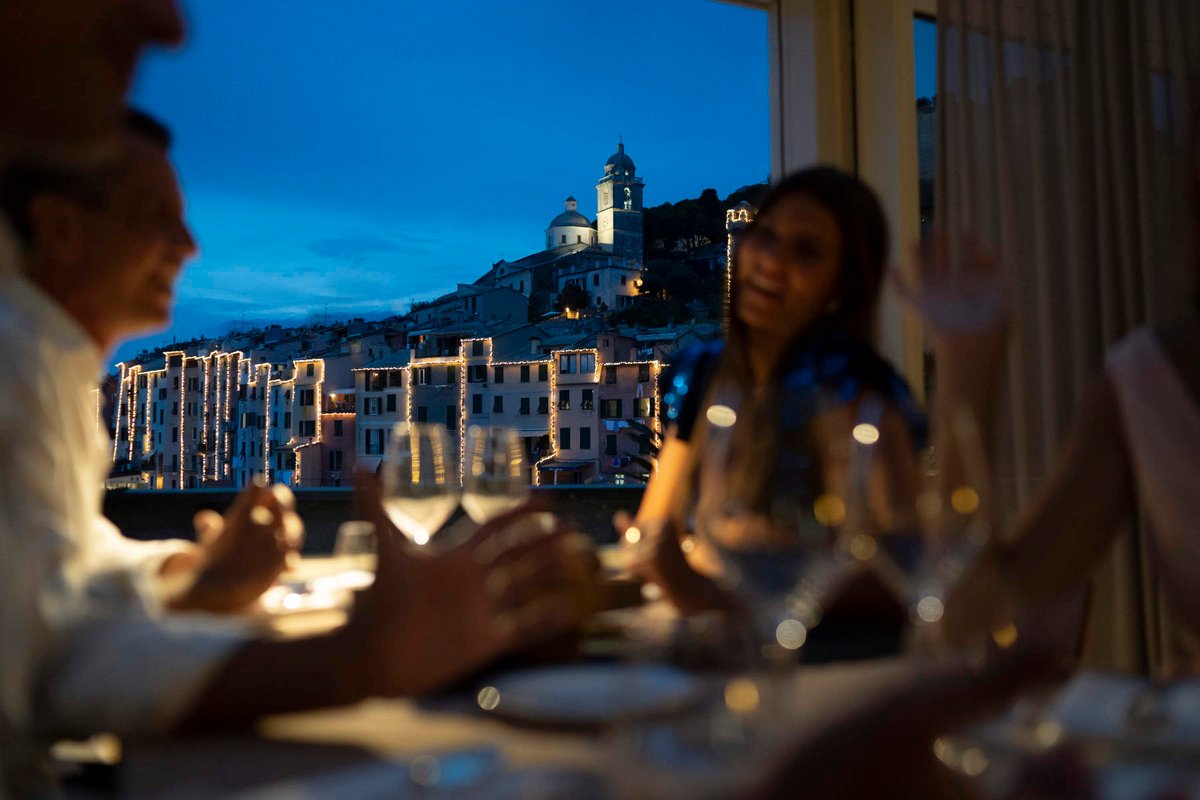
For something more informal, a glass of local wine or an aperitivo at Venus Bar lets the view do part of the work.
But some of the best food moments here are the simplest ones: focaccia from a bakery, a plate of muscoli after a day on the water, or a cold glass of Vermentino as the boats return to the harbour.
A food lover’s day in Portovenere
If food is one of the main reasons you travel, you can easily build a day around it.
Start with focaccia from a local bakery. Spend the morning exploring Portovenere on foot, then stop for a seafood lunch and order muscoli if they are available.
In the afternoon, head onto the water for the Oyster Tour, join an olive oil or wine tasting, or take a cooking lesson and finally learn how to make pesto properly.
As evening arrives, find a table overlooking the gulf. Order whatever looks freshest, ask about the local wines and don’t rush.
Eating well in Portovenere isn’t really about ticking dishes off a list. It is about understanding how closely the food is connected to what you see around you: the mussel farms in the gulf, vineyards clinging to hillsides, olive trees above the coast, basil growing in the Ligurian sun and fishing villages that have been cooking with these ingredients for generations.
Come hungry.
Discover more from Discover Portovenere Blog
Subscribe to get the latest posts sent to your email.

